
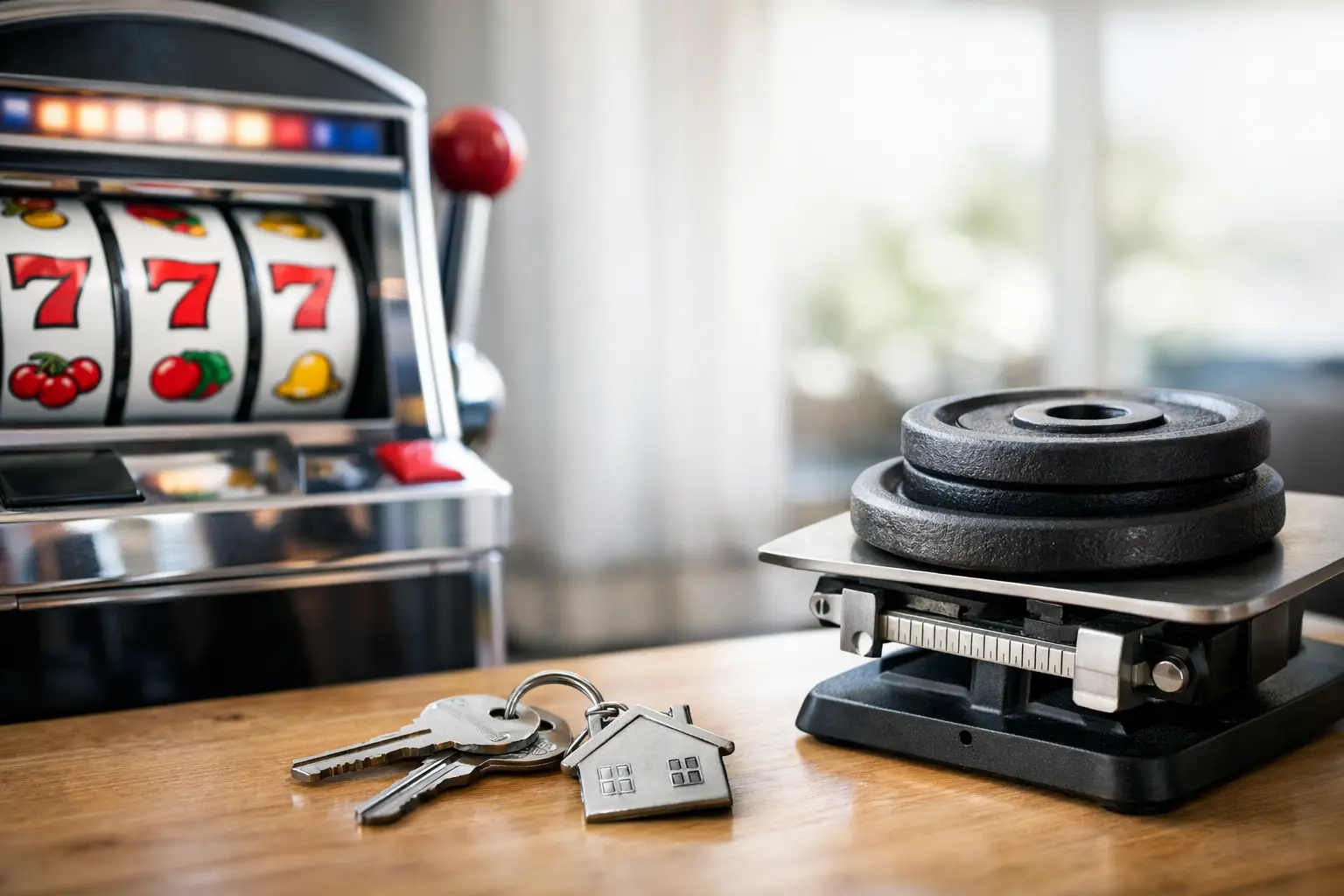
A slot machine can look like a simple addition to the game room until it is time to get it through the door. Slot machine weight is one of the first practical details to consider before choosing a game, especially if your dream setup is in a basement, finished garage, upstairs bonus room, or tight man cave.
These are real former casino machines built to handle years of public use. Their cabinets are made from heavy wood, metal, glass, monitors, power supplies, bill acceptors, and internal hardware. That sturdy casino-grade construction is part of the fun, but it also means planning ahead makes the delivery day much easier.
How Much Does a Slot Machine Weigh?
There is no single answer because cabinet styles, game generations, and screen sizes vary. Still, most full-size casino-style slot machines for home use weigh somewhere between 250 and 450 pounds.
A traditional upright machine with a smaller screen may land around 250 to 350 pounds. Larger video slots, newer cabinets, and games with oversized top boxes can easily reach 350 to 450 pounds or more. Slant-top cabinets, which angle the screen toward the player, are often among the heavier options. Some can approach 500 pounds once all internal components are in place.
Smaller bar-top or countertop gaming machines are a different story. They may weigh roughly 100 to 200 pounds, depending on the cabinet and monitor. They are easier to position, but they do not have the same full casino-floor presence as a standard upright machine.
The exact weight of a particular game matters more than a general estimate. A machine that looks similar to another model can be much heavier because of its monitor, top box, reel assembly, or internal metal framing. Before delivery, ask for the measurements and weight of the specific machine you are bringing home.
Why Slot Machine Weight Matters at Home
Weight is not a reason to skip the machine you love. It simply affects how you prepare the space. A good plan protects your home, your machine, and the people moving it.
The biggest consideration is the route from the truck to the final location. A ground-floor room with a clear path is usually straightforward. A machine headed to a basement, however, may need to navigate exterior steps, a narrow stairwell, low ceilings, turns at the landing, and finished walls that you do not want scratched.
Upstairs placement deserves extra thought. Most modern homes are designed to hold normal furniture, people, appliances, and everyday living loads, but a 400-pound machine concentrates weight in a relatively small footprint. The condition of the home, the room location, and the direction of the floor joists all matter. If there is any uncertainty about an upper-level installation, speaking with a qualified contractor or structural professional is smart peace of mind.
Finished basements can be ideal game room territory. The floor is typically concrete, the space is naturally private, and you can enjoy the machine without worrying about carrying it back upstairs later. Just make sure the path to the basement is wide enough before the machine arrives.
Measure the Route, Not Just the Room
It is easy to measure an open corner in the game room and forget the route leading to it. Before choosing a machine, measure every part of the trip: entry doors, storm doors, hallways, stairways, turns, ceiling height, and the final area where the game will sit.
Pay close attention to narrow points. A standard doorway may be wide enough on paper, but trim, a door that cannot swing fully open, or a tight turn immediately inside can change the situation. Measure the clear opening, not just the door size listed by the builder.
Machine depth is just as important as width. A cabinet often needs to be tilted slightly during a move, which changes the clearance needed at doorways and low ceilings. Professional movers know how to handle this safely, but accurate measurements let everyone plan the right approach.
Also think about where the machine will live after it is placed. Leave enough room to open the main door, access the back if service is ever needed, and comfortably sit or stand at the game. A little breathing room makes the setup feel intentional rather than crammed into a corner.
The Cabinet Is Heavy for Good Reasons
Former casino games were not designed like lightweight home electronics. They were built for busy casino environments, where cabinets needed to stay stable, screens needed protection, and internal components had to withstand constant use.
That weight usually comes from the features that make the machine feel authentic: a solid cabinet, commercial-grade monitor, heavy base, metal brackets, locking doors, and durable internal assemblies. Older reel machines may have particularly heavy mechanical components, while video machines can carry more weight in their screens and electronics.
A quality refurbishment focuses on dependable operation and home-friendly use, not on stripping away the machine’s solid construction. At St. Louis Slots, machines are cleaned, repaired, updated, and prepared for residential enjoyment. Casino-specific sensors, locks, and unnecessary switches can be removed or modified for home use, but the cabinet remains the substantial, real-deal game you wanted.
Plan for Safe Delivery and Placement
A machine in the 250- to 450-pound range is not a two-person lift-and-hope project. Trying to muscle it down a staircase or through a doorway can damage the cabinet, flooring, walls, or someone’s back.
The right moving equipment makes a major difference. A commercial appliance dolly with straps, furniture pads, moving blankets, and a team that understands heavy equipment are worth having. On stairs, experienced movers use controlled techniques and enough help to keep the machine stable from top to bottom.
Once the game reaches its destination, avoid dragging it across hardwood, laminate, or finished flooring. Use furniture sliders or protective materials when appropriate, then level the cabinet once it is in place. A machine that rocks or sits unevenly can be annoying to play and may put unnecessary stress on the cabinet over time.
If the machine will sit on carpet, a firm furniture pad or protective base can help distribute pressure and prevent deep impressions. On hard flooring, non-slip pads can help protect the surface and keep the cabinet from shifting during enthusiastic play.
Do You Need a Special Electrical Setup?
Usually, no. Most home-prepared casino machines are designed to operate from a standard household outlet. The machine’s weight and size may make it feel like commercial equipment, but that does not automatically mean it needs special wiring.
That said, give the game a dedicated, grounded outlet when possible. Avoid overloading a power strip with multiple high-draw items, and do not pinch the power cord behind the cabinet. If your game room includes several machines, arcade games, televisions, a refrigerator, and sound equipment, it is worth considering the overall electrical load for the room.
A surge protector can provide an extra layer of protection for electronics. It is a small addition that makes sense for a machine with a monitor, game board, and power supply inside.
Weight Should Not Keep You From Choosing the Right Game
Some buyers choose the lightest machine because it seems easier to move. That can be a sensible choice for a second-floor room, rental property, or a space with difficult access. But if you have a ground-level game room or basement with a clear route, weight does not need to limit your options.
Choose the cabinet style and game experience you will actually enjoy. A favorite video poker machine, a classic reel game, or a bright multi-line video slot can become the centerpiece of a room for years. The key is matching the machine to the space before delivery instead of trying to solve access problems afterward.
A few careful measurements and an honest conversation about the route can turn a heavy piece of casino history into the easiest, most fun upgrade your game room has seen.
 | Check out our
Comments are closed