
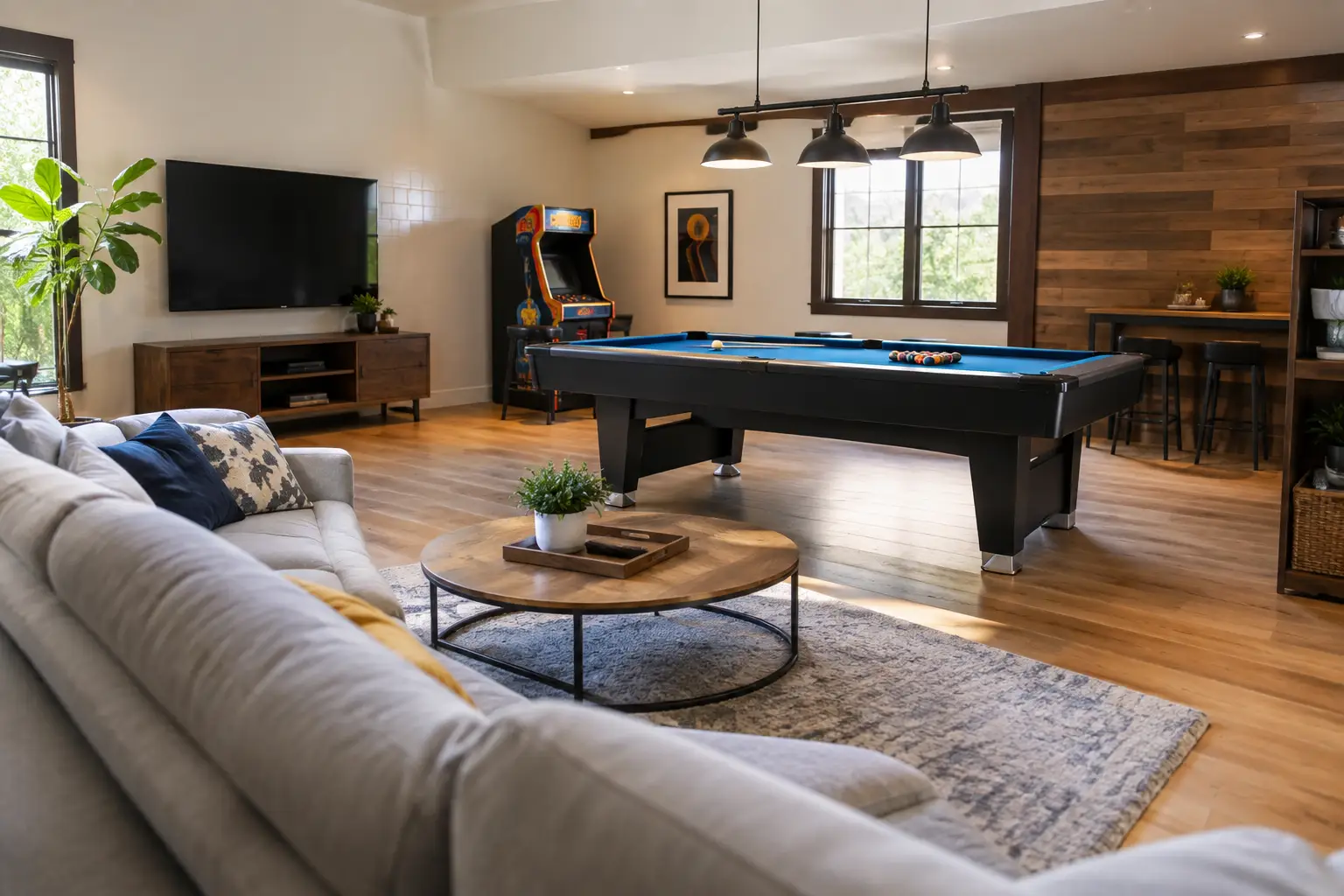
A great game room does not start with a machine shoved against the nearest wall. It starts with the feeling you want when friends walk in: the glow of game screens, a clear path to grab a drink, enough room to pull up a chair, and no awkward squeeze behind someone playing. This guide to game room layouts will help you build that feeling around the space you already have, whether it is a finished basement, garage, den, man cave, she-shed, or bonus room.
The goal is not to make your home look like a crowded casino floor. It is to create a place where authentic casino-style machines, comfortable seating, and your own personality all have room to shine. A little planning upfront keeps the room fun, functional, and ready for years of trouble-free play.
Start With How You Want the Room to Be Used
Before measuring walls or picking paint colors, think about what happens in the room. Is this a quiet retreat where you play video poker after dinner? A weekend hangout for family and friends? A full entertainment space with a bar, TV, pool table, and a lineup of casino games?
That answer determines the layout. A collector with three favorite machines may want them to be the main event, displayed like the conversation pieces they are. A family that entertains often may need a more open center area, with games around the perimeter and seating that does not block the action.
Try to identify the room’s primary activity, then support it with everything else. If slot machines are the focus, do not give the best wall to oversized storage cabinets. If watching the game is the focus, make sure the TV is visible from the seating area without forcing players to twist around in their chairs.
Measure the Real Play Space, Not Just the Room
A room can sound generous on paper and still feel tight once furniture and games are in place. Measure wall lengths, door swings, windows, ceiling height, outlets, vents, support columns, and stairways. Also measure the route from the driveway or garage to the final room. That path matters when you are bringing in a full-size casino machine.
Leave room in front of every game for the player and a little breathing space behind them. A clear walkway of about 36 inches is a good target for high-traffic areas. In a tighter room, you may be able to reduce that slightly in a low-traffic spot, but avoid creating a pinch point where someone has to interrupt a game just to get through.
Machine dimensions vary by cabinet style, so work from the measurements of the actual game you are considering. Depth is especially easy to overlook. A machine may sit neatly against a wall but still extend far enough into the room to crowd a pool table, recliner, or bar stool.
Use painter’s tape on the floor to mark each machine’s footprint, plus the space needed for a player. It is one of the simplest ways to catch a bad fit before anything heavy comes through the door.
Build Your Layout Around a Natural Traffic Path
The best game rooms have an obvious flow. You should be able to enter, look around, and move from the games to the seating or refreshment area without weaving through chair backs and power cords.
For many homes, the easiest approach is to place casino machines along the walls. This protects the open center of the room and gives each machine a clean visual backdrop. It also makes electrical planning more straightforward. A row of machines can look fantastic, but do not pack them so tightly that the cabinets feel cramped or service access becomes difficult.
If you have a larger basement or dedicated recreation room, consider creating zones instead of lining up everything in one long row. One corner can be your casino zone, with a few refurbished slot or video poker machines. Another can hold a pub table or lounge seating. A third might be reserved for a TV, dartboard, or table game.
Zones make a multi-use room feel organized without making it feel formal. They also give guests choices. One person can play a favorite game while someone else watches football or catches up at the bar.
Keep Doorways and Stairs Clear
A beautiful machine placement is not worth it if it blocks the door, narrows a stair landing, or turns the route to the bathroom into an obstacle course. Keep entrances clear and let doors open fully. In basement game rooms, be especially mindful of stair access and low ceilings near the landing.
This is also practical for ownership. A little clearance makes it easier to move a machine for cleaning, rearranging, or service if it is ever needed.
Make the Machines the Feature, Not the Obstacle
Former casino machines have real presence. The cabinet art, button panels, sounds, and lights naturally draw the eye, so give each game enough space to be enjoyed. A wall of machines looks best when it has a sense of intention, even if you build the collection one game at a time.
You can group games by cabinet height, color family, or theme. Matching machines create a polished casino-bank look. Mixing eras and styles can create a more personal arcade-meets-casino vibe. Neither choice is wrong. It depends on whether you want a coordinated room or a collection that tells the story of what you love to play.
Avoid placing a machine where direct sunlight hits the screen all afternoon. Glare makes play less enjoyable, and intense sunlight can be hard on finishes over time. If windows are part of the room, use blinds, curtains, or position games on an adjacent wall.
St. Louis Slots machines are carefully refurbished and prepared for home use, but they still deserve a sensible home. Keep them on a stable, level surface, away from moisture and extreme temperature swings. A damp unfinished basement or a garage that gets brutally hot and cold may need attention before it becomes the permanent home for your games.
Plan Power, Lighting, and Sound Early
Power is easy to underestimate because outlets disappear behind furniture once the room is finished. Start by mapping every outlet, then consider where each machine, TV, mini fridge, lamp, and charging station will live. Use properly rated surge protection where appropriate, keep cords out of walking paths, and do not overload a single outlet or extension cord.
If you are adding several machines or building out a garage, it may be worth having a qualified electrician evaluate the circuit capacity. That is not the flashy part of a game room project, but it is the part that lets the fun run without headaches.
Lighting should support the machines, not compete with them. Soft overhead lighting and dimmable lamps help create atmosphere while keeping the room comfortable for conversation. Bright lights are useful near a bar, tabletop game, or snack station, but avoid placing a harsh fixture where it reflects directly off a game screen.
Sound deserves the same thought. Casino games are supposed to be lively, but several machines running at once can fill a smaller room quickly. If the game room is near bedrooms or shared living spaces, choose a layout that puts machines against an interior wall when possible, add rugs or acoustic panels, and use volume settings that keep the room exciting without taking over the whole house.
Give People Somewhere to Sit and Set Things Down
A game room is more inviting when people can stay awhile. Even if the main attraction is playing, include at least a few comfortable places to sit. A pair of stools, a small loveseat, or a couple of swivel chairs can turn a machine area into a real gathering space.
Just keep seating out of the traffic lane. A recliner may be comfortable, but it is not the best choice if it blocks access every time it is leaned back. Smaller-scale seating often works better in compact rooms.
Add tables where they will actually help. A narrow drink ledge behind seating, a small side table between chairs, or a pub table in an unused corner gives guests a place for drinks and snacks without placing them on top of a machine. That small detail helps protect your games and makes the whole room easier to enjoy.
A Simple Guide to Game Room Layouts by Room Size
In a smaller den or spare bedroom, choose one or two statement machines and keep the center open. A wall-mounted TV and compact seating can complete the room without turning it into a maze.
In a finished basement, use zones. Machines along one wall or in a dedicated corner work well, while the middle of the room can support conversation seating, a bar area, or a table game. Basements often offer the best opportunity to grow a collection over time.
In a garage game room, focus first on comfort and protection. Insulation, flooring, climate control, and a clean electrical setup make a bigger difference than fancy decor. Once the space is comfortable year-round, machines, neon-style signs, and bar seating can give it serious personality.
For a larger entertainment room, resist the temptation to fill every open inch. A pool table needs its own clearance, games need room for players, and people need an easy route between them. Open space is not wasted space. It is what makes the room feel relaxed instead of crowded.
Your game room does not need to be finished all at once. Start with the machine you are most excited to bring home, give it the space it deserves, and let the rest of the room grow around the good times it creates.
 | Check out our
Comments are closed