
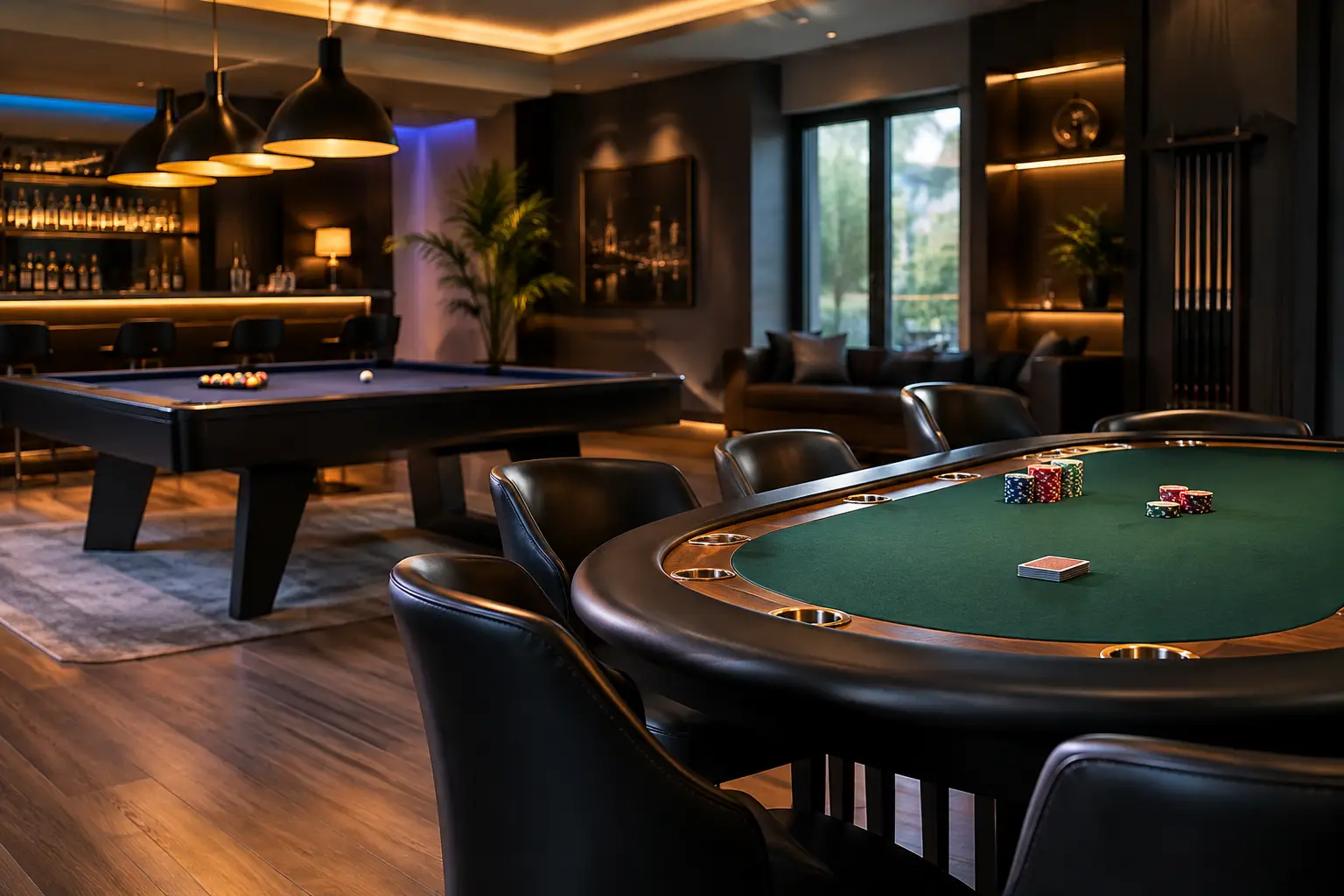
A great game room can have a beautiful restored slot machine, a full bar, and the biggest TV in the house, but harsh overhead lighting can make the whole space feel more like a waiting room than a place to play. The best lighting for game rooms builds excitement without creating glare on screens, washing out machine artwork, or making guests squint across the poker table.
For a home casino, basement hangout, garage lounge, or dedicated man cave, the goal is layered light. You want enough brightness to move around safely and enjoy the details of the room, plus softer, more dramatic lighting that makes the space feel special after the sun goes down. It is the same reason casinos never rely on one bright ceiling fixture: atmosphere matters.
Start With Layers, Not One Big Light
The easiest mistake in a game room is installing a powerful ceiling light and calling the job finished. That may technically light the room, but it rarely feels inviting. It can also create reflections on slot machine glass, video poker screens, televisions, and framed collectibles.
Think of game room lighting in three working layers. Ambient lighting provides the overall brightness for entering, cleaning, finding a dropped card, and walking safely around machines. Task lighting helps with a specific activity, such as reading cards at a table, mixing a drink, or adjusting a machine. Accent lighting adds the fun – the glow behind a bar, under shelves, around a sign, or along a wall of games.
When those layers can be controlled separately, the room works at more than one setting. You can keep it bright for setup and maintenance, then lower the general lights and let the games, signs, and accent lights take over when friends arrive.
The Best Lighting for Game Rooms Starts With Dimmers
If there is one upgrade that earns its keep every time you use the room, it is a dimmer. Dimmable recessed lights, track lights, or ceiling fixtures give you control over mood without sacrificing the practical light you need at other times.
Choose LED bulbs labeled dimmable and make sure the dimmer switch is compatible with LEDs. Older dimmers can cause flickering, buzzing, or a limited dimming range. It is a small detail, but a room full of blinking slot machines does not need ceiling lights that flicker too.
For most home game rooms, warm white light in the 2700K to 3000K range creates a comfortable, lounge-like feel. It works especially well with wood bars, dark walls, vintage casino signs, and the colorful artwork found on many gaming machines. If the room has a cleaner, more modern look, 3000K to 3500K can feel crisp without becoming cold.
Cooler daylight bulbs, often 4000K and above, have their place in workshops and utility spaces. In a game room, though, they can make upholstery, painted walls, and classic casino machines feel flatter and less welcoming. They also tend to fight against the warm glow coming from the games themselves.
Keep Glare Off Slot Machines and Screens
Former casino slot machines and video poker machines are built to catch the eye. Their screens, button panels, glass, and colorful lighting are part of the experience. Poorly aimed room lighting can turn those same surfaces into mirrors.
Avoid placing a bright downlight directly in front of a machine or directly above its screen. The light may be behind the player but still bounce off the glass into their eyes. Instead, position ceiling lights slightly to the side of a machine bank, or use adjustable fixtures that can be aimed toward open floor space and wall décor.
Recessed lights with deep trim are a good option because the bulb sits farther inside the ceiling, which helps reduce direct glare. Track lighting can also work beautifully in a game room, especially if you want to spotlight artwork, a collection of casino memorabilia, or the bar area. Just take the time to aim each head after the machines are in place.
Televisions need the same consideration. A light source directly opposite a TV creates the kind of reflection that makes people shift seats during the big game. For a TV wall, use soft indirect lighting behind the screen or lighting placed off to the sides. This reduces eye strain while keeping the picture easy to see.
Give the Bar and Table Their Own Light
A bar is usually one of the social centers of a home game room, so it deserves more than whatever light happens to reach it from the ceiling. Pendant lights over a bar can add personality and provide useful task light for serving drinks, setting out snacks, or reading labels. Keep the bottoms of pendants high enough that guests can see one another across the counter.
For a poker table, pool table, or card table, focused overhead light is helpful, but it should be broad and diffused. A fixture with exposed bulbs pointed straight down can create hard shadows and bright spots on the felt. A shaded billiard-style fixture or a wide pendant with frosted diffusers gives players a clearer view of cards and chips without feeling clinical.
The right height depends on ceiling height and the size of the table. In general, the fixture should light the entire playing surface without sitting so low that someone tall bumps into it while standing up. Before final installation, have a family member or friend stand around the table and check sightlines from every seat.
Use Accent Lighting for the Casino Feeling
Accent lighting is where a game room becomes your game room. LED strip lights under a bar lip, beneath shelving, behind a TV, or along the back edge of a display cabinet can provide a rich glow without adding glare. They are especially useful in darker basements where natural architectural features are limited.
Color-changing LEDs can be fun, but they work best when used with some restraint. A single color that supports the room’s personality – red, blue, purple, or a warm amber – often feels more polished than a constantly cycling rainbow. Save color-changing effects for party mode, game day, or a special event.
Lighted signs, vintage-style marquees, and illuminated wall art can also add character. Let them act as accents rather than your main source of light. If every wall flashes at full brightness, the room can become visually tiring, and the machines lose the attention they deserve.
If you own a restored casino machine, its built-in lighting already brings plenty of excitement. At St. Louis Slots, we put serious care into making machines home-ready, and thoughtful room lighting helps you enjoy every detail without overpowering the game itself.
Plan for How You Actually Use the Space
The best setup depends on whether your game room is a quiet retreat for two people or the place where everyone gathers on Saturday night. A room used mostly for video poker, slots, and relaxing may lean darker, with warm dimmed ambient light and subtle accents. A space that hosts card nights needs brighter, more even table lighting. A combined game room and media room needs lighting zones so the TV area can stay dark while the bar remains usable.
Natural light matters, too. Windows make a room feel open during the day, but direct sun can cause glare on displays and may fade artwork over time. Adjustable blinds, shades, or curtains give you control without turning the room into a cave. In a basement with little daylight, use several warm light sources at different heights rather than relying only on overhead fixtures. Floor lamps and wall sconces can make the space feel less flat.
Do not forget service access. Slot machines need room around them for cleaning, moving, and occasional maintenance. Place lamps, cords, and freestanding fixtures where they will not block doors, vents, or the path behind a machine. Clean cable management keeps the room safer and preserves that polished casino-floor look.
A Simple Lighting Setup That Works
For many home game rooms, a dependable starting point is dimmable recessed or track lighting for the room, a dedicated fixture over the card or pool table, pendants or under-cabinet lighting at the bar, and low-level LED accents behind the TV or display shelves. Put the main areas on separate switches or smart controls so you can adjust the room in seconds.
Before buying every fixture, bring in one machine, turn on the TV, and test the room at night. Look for screen reflections, dark walking paths, overly bright corners, and spots where guests will cast shadows over the table. Lighting plans look one way on paper and another when colorful machines are glowing in the room.
The right lighting should make people want to stay for one more hand, one more spin, and one more story around the bar. Build in flexibility, keep glare under control, and let the games provide the sparkle they were made to deliver.
 | Check out our
Comments are closed