
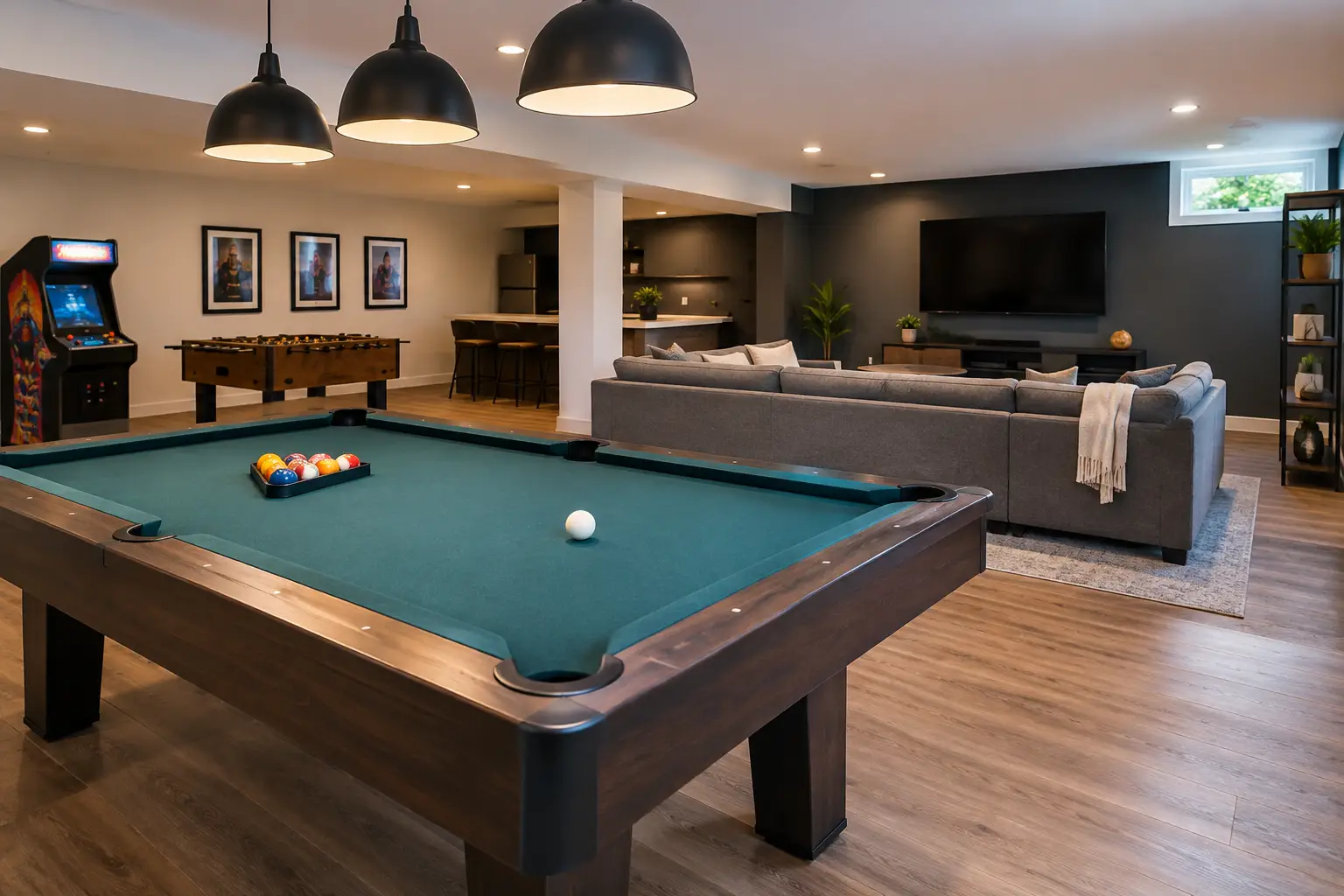
A great basement game room does not start with the machines. It starts with a space that can handle them. When you know how to prepare a basement game room before bringing in a slot machine, video poker game, pool table, or big-screen TV, you avoid the frustrating stuff later: damp carpet, overloaded outlets, cramped walkways, and equipment that is hard to move or service.
The goal is not to make your basement look like a commercial casino. It is to create a comfortable place where friends can gather, nostalgia can take over, and every game is ready when you are. A little planning makes that possible.
Start with the basement itself
Before picking a theme or shopping for games, take an honest look at the room. Basements can be fantastic entertainment spaces because they are naturally separate from the rest of the house, but they also come with challenges that upstairs rooms do not.
Check for moisture first. Look along the walls and floor for stains, peeling paint, musty smells, active leaks, or signs of past flooding. A basement does not have to be perfectly dry to become a game room, but any water issue needs attention before you install flooring, furniture, or electronic machines. A dehumidifier can make a major difference in a finished basement that feels clammy during humid Missouri summers.
Temperature matters, too. Casino-style machines contain electronics, screens, power supplies, and moving parts that are happier in a stable home environment than in a hot garage or a damp storage area. If the basement gets very cold in winter or sticky in summer, consider improving insulation, sealing air leaks, or extending your home’s HVAC coverage. You do not need museum-level climate control. You do want a room that stays reasonably comfortable year-round.
Plan the room around how people will use it
The best game rooms have a natural flow. People should be able to walk in, grab a drink, sit down, play, and move between games without squeezing past chairs or bumping into cabinet corners.
Start by choosing the room’s main attraction. For some homeowners, that is a row of authentic refurbished slot machines. For others, it is a pool table, arcade cabinet, bar, or sports viewing area. Give that centerpiece the best wall, the clearest sightline, or the most open floor space. Then build the rest of the room around it.
Do not fill every empty wall just because you can. A single casino slot machine can be a conversation piece on its own, while two or three machines can create a true mini-casino feel. The right number depends on the size of the room and whether you want space for seating, card games, or other hobbies.
As a practical rule, leave enough clearance for players to stand comfortably at each machine and for someone to pass behind them. Also think ahead to service access. Machines eventually need cleaning, light maintenance, or a little troubleshooting. Avoid wedging them so tightly into a corner that they cannot be moved when needed.
Measure the route, not just the destination
Many game room plans look perfect until delivery day. Measure the basement doorway, stairwell, turns in the staircase, hallway width, and ceiling clearance before buying large equipment. Former casino machines are built for durability, and that means they can be heavy and substantial.
Measure twice and account for handrails, low ceilings, and tight landing turns. If access is limited, a smaller upright machine or a different location may make more sense. This one step can save a lot of sweat and a very awkward moment halfway down the stairs.
Give your games the right power
Power planning is one of the least glamorous parts of a basement game room, but it is what keeps the fun going. Older basements often have fewer outlets than modern entertainment spaces need. A machine, television, sound system, refrigerator, lamps, phone chargers, and gaming console can add up quickly.
Walk the room and identify where each item will plug in. If outlets are scarce or located behind furniture, it may be worth having a qualified electrician add properly placed outlets before the room is finished. This is cleaner and safer than relying on a web of extension cords.
Use quality surge protection for electronic equipment. It is a simple layer of protection against power fluctuations, especially in a room with several valuable machines. Keep cords organized and out of footpaths. If a cord must cross an open area, use a proper floor cable cover rather than hiding it under a loose rug.
Authentic casino games prepared for home use should be set up for residential operation, not dropped into a basement exactly as they came off a casino floor. At St. Louis Slots, machines are cleaned, repaired, updated, and modified to remove casino-specific sensors, locks, and unnecessary switches before they are ready for home entertainment. That preparation gives owners a lot more confidence than buying an unknown machine that has been sitting in a warehouse or garage.
Choose flooring that can take a good time
Flooring has to work harder in a basement game room than it does in a formal living room. It should be comfortable underfoot, easy to clean, and realistic for the moisture conditions in the space.
Luxury vinyl plank is a popular choice because it handles basement life well and comes in styles that fit nearly any theme, from sports bar to retro arcade. Carpet tiles can also work nicely if you want warmth and sound absorption, especially because individual tiles can be replaced if one gets stained or damaged. If you already have concrete floors, area rugs can soften the space, but make sure the floor is dry and use rugs with a backing that will not trap moisture.
Avoid making a flooring choice based on looks alone. A light, plush carpet may feel great at first, but it is not always the best fit for a basement where people may be carrying drinks, snacks, and heavy equipment.
Set the mood with layered lighting
Basement lighting should make games easy to see without making the room feel like an office. A single bright ceiling fixture usually creates harsh shadows and does not do much for the atmosphere.
Use layers instead. General overhead lighting helps people move around safely. Accent lighting, such as wall sconces, LED strips behind a bar, or a vintage-style sign, adds personality. Dimmable lighting is especially useful because you can brighten the room for setup and cleaning, then lower it when it is time to enjoy the glow of game screens and cabinet lights.
Be thoughtful about glare. Place televisions and machines so overhead lights do not reflect directly on their screens. If your basement has windows, simple shades can help control afternoon light while still keeping the space from feeling closed in.
Build comfort into the room
A game room gets used more when it is comfortable enough to stay awhile. Include seating for both players and spectators. Bar stools work well near machines or a counter, while a small sofa or a few lounge chairs create a place to relax between games.
Sound is another consideration. Slot machines, video poker games, televisions, and music all bring energy to the room. That is part of the fun, but hard basement surfaces can make sound bounce around. Rugs, upholstered furniture, acoustic wall panels, and even fabric curtains can reduce echo without making the room feel overly designed.
If the basement is below bedrooms or near a shared wall, plan for volume control from the beginning. A soundbar with a good night mode, adjustable machine volume, and a door at the top of the stairs can go a long way toward keeping everyone happy.
Add personality without creating clutter
This is the room where you can have fun with the details. Framed casino memorabilia, sports signs, neon-style décor, vintage movie posters, or a favorite team’s colors can give the room a clear identity. Pick a direction instead of mixing every idea at once. A retro casino lounge, a sports bar, and a classic arcade can all look great, but each has a different feel.
Storage keeps the room looking intentional. A cabinet or bar cart can hold cards, game accessories, remotes, cleaning supplies, and spare batteries. If snacks and drinks are part of the plan, give them a designated home. That leaves the game surfaces clear and lets the machines remain the stars of the room.
How to prepare a basement game room for the long haul
Once the room is set up, think about ownership as part of the experience. Dust is the enemy of electronics, so keep the room reasonably clean and avoid blocking ventilation areas on machines. Do not set drinks directly on game cabinets, and keep food away from button decks and bill areas. A quick wipe-down and occasional vacuum around the bases of machines does more good than most people realize.
It also helps to buy entertainment equipment from people who understand what it needs after the sale. Refurbishment quality, updates, and ongoing support matter much more than a bargain price when you want a machine that will be part of your home for years. A home game room should feel exciting, not like a new repair project every weekend.
Leave yourself room to grow. Your first machine may lead to a second, a card table, or a better seating area once you see how friends and family use the space. Prepare the basement thoughtfully now, and it can become the place everyone looks forward to visiting – no casino trip required.
 | Check out our
Comments are closed