
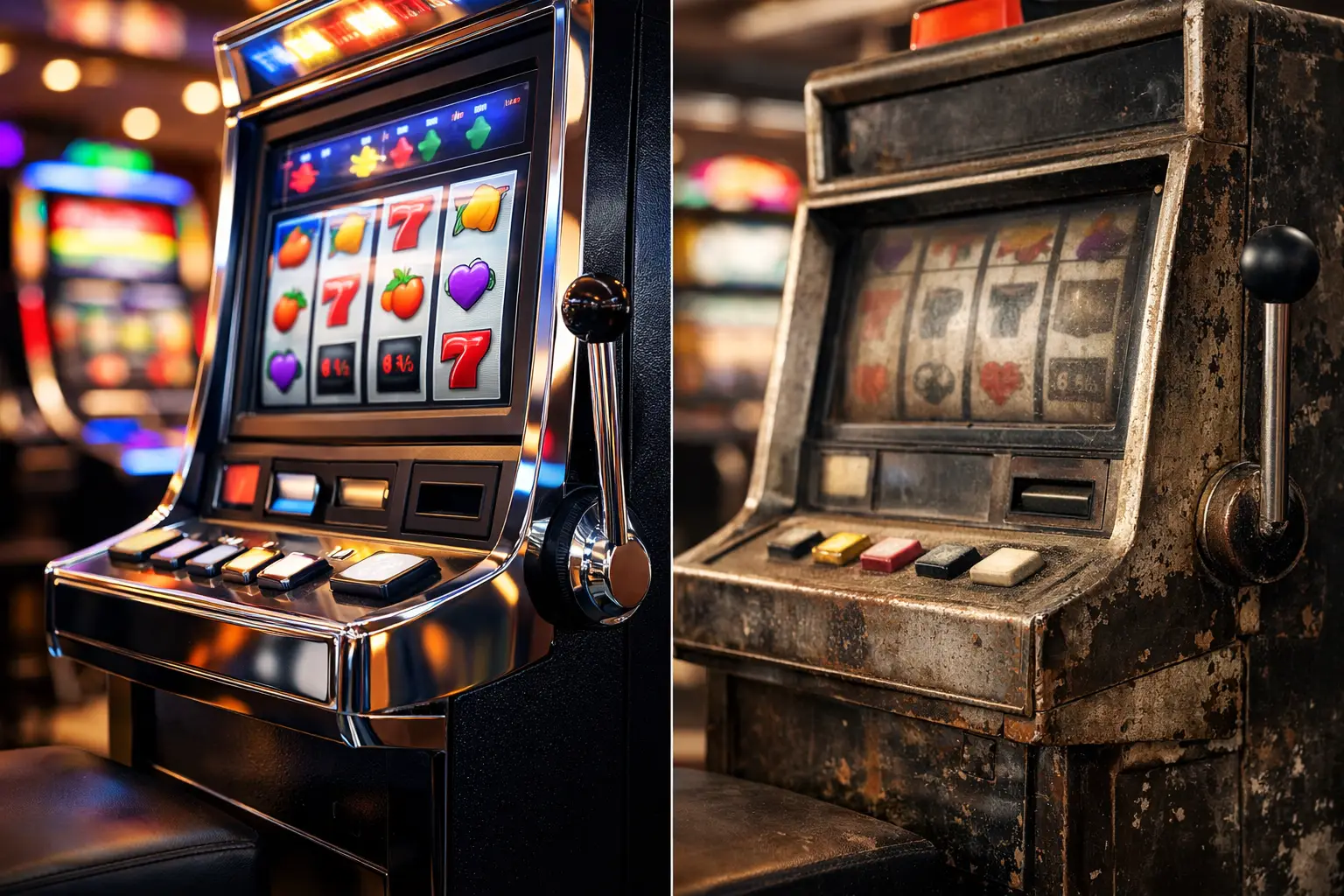
That cheap slot machine listing can look like a steal right up until it lands in your garage and throws an error code you have never seen before. When people ask about buying restored slots versus as is, what they are really asking is simple: do you want a machine you can enjoy, or a project you may or may not ever finish?
For a home game room, basement, man cave, or she-shed, that difference matters a lot. A former casino machine is not the same as buying a used end table or an old jukebox. These games are built to run in a commercial environment, and when they leave that environment, they often need real work before they are ready for residential use. That is where the gap between restored and as-is becomes very real.
What buying restored slots versus as is really means
An as-is slot machine is typically sold in its current condition, with no promise beyond what you can see at pickup or delivery. Maybe it powers on. Maybe the lights work. Maybe the bill acceptor is flaky, a button sticks, the reels hesitate, or the monitor is near the end of its life. In many cases, the seller either does not know what is wrong or does not plan to find out.
A restored machine is different. It has been gone through, cleaned, tested, repaired, and prepared for home use. That last part is a bigger deal than many first-time buyers realize. Casino machines often include sensors, locks, and switches that made sense on a casino floor but create headaches in a house. A properly refurbished machine is adjusted for the way a homeowner will actually use it.
That does not mean every restored machine is identical or every as-is machine is bad. It means the buyer needs to understand what kind of ownership experience they are signing up for.
The real cost is not always the sticker price
The strongest argument for buying as-is is the upfront price. It is usually lower, sometimes by a lot. If you are comparing two of the same style machines side by side, the untouched one can look like an easy win.
Then the hidden costs start showing up. You may need replacement buttons, a power supply, a new monitor, harness repairs, software attention, or help diagnosing why the game boots but will not play correctly. Even if the machine technically works, it may not work consistently. That turns a bargain into a repair project.
A restored slot usually costs more because someone has already done that work. They have spent the time cleaning years of casino dust and residue out of the cabinet, checking components, updating what needs updating, replacing failed parts, and making sure the game is ready to run in a home setting. You are paying for labor, experience, and fewer surprises.
If you enjoy troubleshooting electronics and hunting down parts, that trade-off may be fine. If you want to bring home a game, plug it in, and start enjoying it this weekend, the cheaper option can become the more expensive one fast.
Reliability is where most buyers feel the difference
A slot machine in your house should be fun. That sounds obvious, but it is the point. Most homeowners are not trying to become part-time slot techs. They want the lights, sounds, nostalgia, and casino feel without a pile of maintenance problems.
This is where restored machines shine. When a machine has been inspected carefully and repaired before sale, you are far less likely to deal with dead screens, random lockups, coin or bill issues, weak buttons, or mystery faults. A proper refurbishment also catches the kind of small problems that can become major ones later.
With as-is machines, reliability is often a gamble in the truest sense of the word. Some are decent and need very little. Others look complete but have years of wear that only show up after a few hours of use. The seller may say it was working when removed, but removed from where, and under what conditions? That phrase alone does not tell you much.
Home use is not the same as casino use
One of the biggest things people miss when comparing buying restored slots versus as is is the difference between commercial setup and home setup. A machine can be functional in a casino environment and still be annoying or impractical in a house.
Former casino games often have features tied to floor operations, security, and accounting that do not add value for a homeowner. In fact, they can get in the way. A solid restoration process removes unnecessary complications so the machine works the way a home owner expects it to work.
That matters because most buyers are not looking for a museum piece they are afraid to touch. They want something family and friends can enjoy during game night. They want a machine that fits naturally into a fun room, not one that acts like it still belongs under casino surveillance.
When as-is actually makes sense
There are buyers who should absolutely consider as-is. If you are experienced with older gaming machines, comfortable using a multimeter, familiar with common slot components, and patient about sourcing parts, an as-is purchase can be rewarding. You might save money, and you may enjoy bringing a neglected machine back to life.
Collectors sometimes go this route too, especially if they are hunting for a rare cabinet or a specific title and know restoration will be part of the deal. In that case, the machine itself is the prize, even if the work ahead is substantial.
But that is a narrower group than many people think. A lot of buyers imagine they are getting a small fixer-upper when they are really taking on an unpredictable electronics project. If your idea of fun is playing the machine, not diagnosing it, restored is usually the smarter fit.
What a quality restoration should include
Not all refurbishing is equal. A machine can be wiped down and called restored without much real work being done. Buyers should look for signs of a process, not just a claim.
A quality restoration should include a detailed inspection, cleaning inside and out, repair or replacement of worn components, software and firmware checks when needed, and testing to make sure the machine performs reliably. It should also include preparation for home use, because that is what separates a former casino machine from a machine that actually belongs in your house.
At St. Louis Slots, that hands-on approach is a big part of the value. A machine that has been shopped, updated, cleaned, repaired, and checked through a structured inspection process gives buyers a very different ownership experience than rolling the dice on whatever condition a machine happens to be in.
Support matters more than most people expect
Even a good machine can eventually need attention. These are real gaming machines with real components, not decorative props. That is why support matters.
When you buy as-is, support is often nonexistent the moment the sale is over. If something goes wrong next week, you are on your own. That may be fine if you know what you are doing. For most homeowners, it is frustrating.
When you buy restored from a service-minded seller, you are not just buying the machine. You are buying confidence that if something comes up, someone can help. That matters even more for first-time buyers who want the fun of ownership without feeling stranded by a technical issue.
Which option fits your game room best?
If your goal is dependable fun, restored usually wins. You get a cleaner machine, a better chance at trouble-free use, and a setup that makes sense in a home. You also avoid the common trap of underestimating how much work an old casino machine might need.
If your goal is the project itself, as-is can still be the right choice. Just go into it honestly. Budget for repairs, expect delays, and assume there may be problems you cannot see on day one.
For most people building out a game room, the best machine is not the cheapest one. It is the one that turns on, plays right, and keeps everybody smiling instead of standing around wondering why the reels froze again. Buy the experience you want to have, not just the cabinet you want to own.
 | Check out our
Comments are closed