
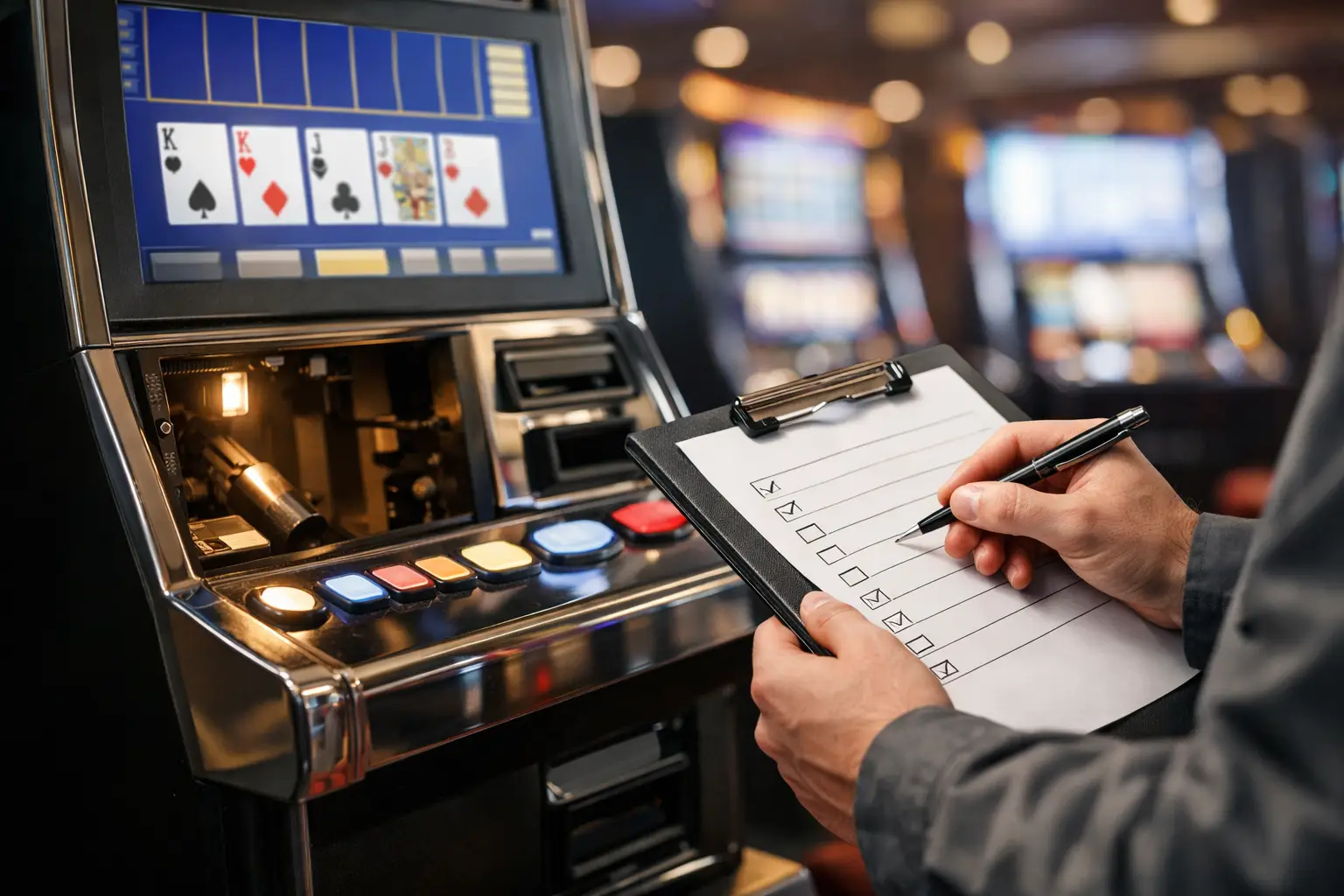
That bargain-priced cabinet can get expensive fast if nobody has checked what is happening behind the glass, under the button panel, and inside the door. A good used video poker machine inspection checklist helps you separate a fun home game room piece from a machine that is about to turn into a repair project.
For most buyers, the goal is not to become a slot tech overnight. It is to bring home a machine that looks great, plays right, and does not need constant tinkering. That is where inspection matters. A machine can power on and still have weak monitors, worn buttons, flaky power supplies, outdated software, broken door switches, or casino-specific parts that make home use harder than it should be.
What a used video poker machine inspection checklist should actually cover
A real inspection is more than plugging the machine in and seeing if cards appear on the screen. If you are buying a former casino game, you want to know how it performs, how it was maintained, and whether it has been prepared for residential use.
Start with the cabinet itself. Cosmetic wear is normal on used equipment, especially around the coin door, button deck, lower panels, and trim. Small scratches are one thing. Swollen wood, soft spots, rust, cracked laminate, broken hinges, or bent doors are different. Those issues can point to moisture exposure, rough handling, or long-term neglect.
Then move to the monitor. On a video poker machine, the screen is the whole experience. Look for dimness, burn-in, flicker, dead pixels, color problems, image rolling, or delayed startup. Some older monitors can still function while showing clear signs they are getting tired. If the display is weak now, it usually does not get better later.
The button panel deserves close attention too. Press every button multiple times. Bet, draw, deal, cash out, service, and menu buttons should feel responsive and consistent. Sticky, mushy, or intermittent buttons are common on heavily played machines. They are often repairable, but they still tell you how much wear the machine has seen.
Check the inside, not just the outside
Open the machine and look for signs of care. A clean interior usually says a lot about how the machine was handled. Dust is normal. Thick grime, loose wires, missing brackets, cut harnesses, non-matching parts, and sloppy repairs are warning signs.
The power supply is one of the biggest make-or-break components. If the machine has trouble booting, randomly resets, or shows unstable behavior, the power section may be the culprit. Fans should spin properly, wiring should be secure, and connectors should not look scorched or brittle.
Boards and chips matter as well, especially on older game platforms. Check that the main board is mounted properly, chips are seated, and battery-backed memory components are not leaking. Corrosion around battery areas can turn a manageable repair into a much more expensive one.
If the machine includes ticket printers, bill acceptors, coin mechanisms, or hoppers, test them if they are meant to remain active for home use. Some buyers want full functionality for the authentic feel. Others do not need every commercial feature. That is one of those it depends situations. What matters is knowing what works, what has been disabled, and what was intentionally removed to make the machine better suited for a house instead of a casino floor.
Home-use modifications are a big deal
This is where many buyers get surprised. A casino-ready machine and a home-ready machine are not always the same thing. Commercial gaming equipment often includes sensors, locks, door logic, cash handling systems, and security features that are unnecessary in a basement, garage, or rec room.
A strong used video poker machine inspection checklist should confirm whether those components have been addressed properly. If they are left untouched, you may end up with nuisance errors, startup issues, door alarms, or machine states that require technical knowledge just to clear.
For home use, you want the game to operate cleanly without extra casino hardware getting in the way. That can include removing unnecessary switches, bypassing nonessential commercial logic, updating software where appropriate, and making sure the machine starts up and plays reliably on standard residential power.
That preparation work is not flashy, but it is what makes ownership fun instead of frustrating.
Software, firmware, and setup history matter
A machine can look beautiful and still have old software issues. Ask whether the game software and firmware have been checked or updated. Depending on platform and age, updates can improve stability, fix known bugs, and support replacement hardware.
You also want to know whether the machine has been tested through full play cycles. It is one thing to reach an attract screen. It is another to run multiple games, cycle credits, test audio, verify payout logic, and make sure error conditions do not pop up after twenty minutes.
If a seller cannot tell you what was inspected, repaired, or updated, you are mostly buying on hope. That does not always mean the machine is bad, but it does mean the risk is shifting to you.
Listen to the machine
Sound is easy to overlook until you get the game home and realize the speakers crackle or one side is dead. During inspection, test the volume controls, game sounds, button feedback, and any service audio. Distorted sound can come from speakers, wiring, amplifier boards, or settings, so it is worth checking before you buy.
Pay attention to fans, too. A slight hum is common. Grinding, rattling, or high-pitched noise usually points to worn cooling fans or power components that may need service. Again, some of these fixes are simple. The issue is not that a used machine needs attention now and then. The issue is buying one without knowing what attention it needs.
Ask for proof of inspection, not just promises
A seller saying a machine is tested is nice. A seller showing what was tested is better. If there is an inspection process, ask what it includes. Was the monitor checked? Were buttons replaced if needed? Was the cabinet cleaned inside and out? Were boards tested, power supplies verified, and worn parts swapped out?
The more specific the process, the more confidence you can have. That is one reason buyers tend to feel better with businesses that refurbish machines hands-on instead of simply flipping whatever came off a truck that week.
If a company uses a formal inspection process, even better. At St. Louis Slots, for example, the value is not just that a machine works when it leaves the shop. It is that the machine has been cleaned, shopped, repaired, updated, and prepared for real home use by people who actually know these cabinets inside and out.
Red flags that should slow you down
Some issues are cosmetic and manageable. Others should make you pause. Be careful if the machine has no keys, missing back doors, obvious board damage, active error codes, an untested monitor, or a seller who will not open the cabinet. The same goes for machines described as working when last used, powers on but not tested, or probably an easy fix.
Sometimes it really is an easy fix. Sometimes it is three problems stacked on top of each other. Unless you enjoy troubleshooting electronics and sourcing older parts, those gambles can get old fast.
Price matters, of course, but value matters more. Paying less for a machine that still needs a monitor, button rebuild, cleaning, software work, and home-use conversion is not always saving money.
The smartest checklist question is simple
Ask this: is this machine ready to live in my home, or am I buying a project?
That question cuts through a lot of sales talk. If you want a restoration project, you can accept more uncertainty and possibly save money up front. If you want something that plugs in, looks sharp, and plays the way it should, then your inspection checklist needs to focus on reliability, refurbishment quality, and home-use preparation as much as appearance.
A used video poker machine should bring back that casino feel without bringing home casino headaches. The best machines are not just old machines that still turn on. They are used machines that have been cared for, corrected where needed, and made easy to enjoy. Buy with that standard in mind, and your game room will be a lot more fun from day one.
 | Check out our
Comments are closed