
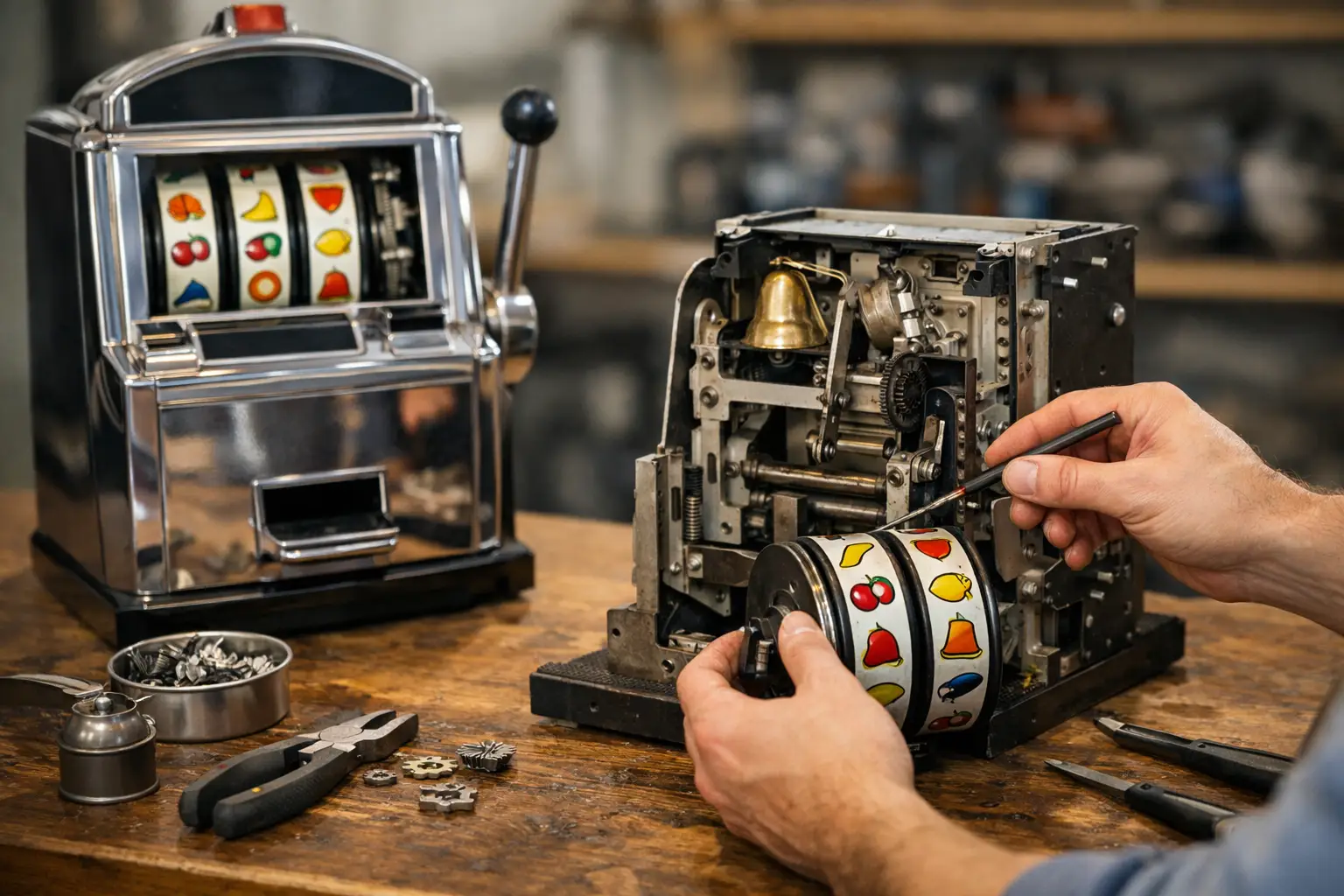
That old casino slot machine in a garage corner can look like an easy cleanup job until you power it on and realize half the challenge is what you cannot see. A real guide to slot machine restoration starts there – not with chrome polish, but with the guts of the machine, the home-use conversion, and the small repairs that decide whether it becomes a fun centerpiece or a frustrating project.
For collectors and game room owners, that difference matters. A former casino machine was built for a commercial floor, constant use, and regulated operation. Your home setup is different. You want reliable play, clean presentation, and simple day-to-day use without chasing electrical gremlins or wondering why a door switch keeps shutting things down.
What slot machine restoration really includes
When people hear restoration, they often picture cosmetic work first. Cabinet cleaning, fresh trim, better buttons, maybe a brighter topper. That part matters, but on a used casino machine, appearance is only one piece of the job.
A proper restoration usually means cleaning the cabinet inside and out, repairing worn components, testing power supplies, checking button panels, inspecting wiring, updating software or firmware when needed, and making sure the machine can operate properly in a residential setting. On many machines, it also means removing or bypassing casino-specific sensors, locks, and switches that made sense on a gaming floor but create headaches at home.
That is where many buyers get surprised. A machine can look decent and still be far from ready for reliable home use. Restoration is not just making it pretty. It is making it usable.
Guide to slot machine restoration for home use
If your goal is a machine that works in a basement, garage, bar area, or game room, restoration has to be approached differently than a museum-level preservation project. Home owners usually care more about smooth operation than strict historical originality, and that is a practical choice.
For example, keeping every original casino lockout feature may sound authentic, but it can make ownership annoying. Some commercial machines rely on door sensors, accounting inputs, ticketing hardware, or attendant-related functions that do nothing useful in a home. If those systems are failing, the machine may not boot or play correctly. In a home-use restoration, the smart move is often to simplify.
That does not mean cutting corners. It means restoring the machine for the life it is actually going to have. A slot machine in a finished basement needs dependability more than regulation-floor complexity.
Start with the cabinet and overall condition
The first pass should answer one question: is the machine a strong candidate for restoration? Check the cabinet for swelling, water damage, cracked trim, broken hinges, and severe rust. Surface wear is normal. Structural damage is where costs can climb fast.
Then look at the monitor area, belly glass, reels or screen, button deck, speakers, locks, and internal access. If major parts are missing, the machine may still be restorable, but it becomes more of a parts hunt than a straightforward project. That can be worthwhile for a rare model, but less so for a common machine.
Clean before you diagnose too much
Casino machines collect dust, nicotine residue, grime, and sometimes years of paper debris. A careful cleaning often reveals what is actually broken versus what is simply dirty. Buttons can stick because of buildup. Fans can get noisy because they are clogged. Connectors can look worse than they are.
This is one of those steps people rush, and it usually costs them time later. Clean first, inspect second, replace third. You will make better decisions that way.
Electrical and board work takes patience
Once the machine is clean, the real test begins. Power supplies, harnesses, button lamps, monitors, reel assemblies, bill validators, coin comparators, and sound boards all need to be checked. Some issues are simple, like a loose connector or aging battery. Others point to board-level faults or failed components that require experience and proper tools.
This is also the moment for honesty. If you are comfortable reading voltages, tracing wiring, and working around powered equipment, you may be able to handle part of the job. If not, this is where professional restoration earns its keep. A machine can be damaged quickly by guesswork, especially when replacement parts are limited.
Why software and firmware matter
A lot of people think slot restoration is mostly mechanical. On older reel machines, that is partly true. On many later slot and video poker machines, software matters just as much as hardware.
Corrupt settings, old firmware, communication faults, and memory issues can keep a machine from operating correctly even when the physical parts seem fine. In some cases, updating or reconfiguring the machine is what finally makes it stable for home use. This is not glamorous work, but it is a big part of dependable restoration.
It is also a good example of why two machines that look identical can behave very differently. One may need little more than cleaning and button service. Another may need a deeper electronic refresh and configuration work before it is ready to enjoy.
The trade-off between originality and usability
Every restoration has a point where you decide what matters more: keeping everything exactly as it left the casino floor, or making the machine easier to own. There is no single right answer. It depends on the machine and the owner.
Collectors sometimes want original locks, original validators, original glass, and original operating behavior. That can be satisfying, especially on rare machines. But for many home buyers, usability wins. They want to plug the machine in, hear the sounds, watch the lights, and enjoy the game without dealing with service-door errors or casino-floor hardware that no longer serves a purpose.
That is why a professionally shopped machine often has more real value than an untouched one. It may be less pure in a collector sense, but more enjoyable in everyday life.
What a thorough restoration process should include
A dependable restoration usually includes a full interior cleaning, inspection of wear items, testing of electrical systems, repair or replacement of failed parts, software checks, monitor or reel evaluation, and home-use modifications where needed. It should also include repeated testing, not just a quick power-on.
That final point matters. A machine that runs for five minutes is not proven. A machine that has been tested through full play cycles, button use, sound checks, payout functions, and door access events is much closer to ready.
Businesses that do this well put real love into the details. At St. Louis Slots, for example, the value is not just in finding the machine. It is in the hands-on work that makes it reliable after the sale.
Common restoration mistakes people make
The most common mistake is buying based on appearance alone. A shiny cabinet can hide weak electronics, worn buttons, failing displays, or hacked wiring. The second mistake is assuming every casino machine can be dropped into a house and used as-is. Many cannot.
Another big one is replacing parts too quickly without proper diagnosis. Random parts swapping gets expensive and often misses the real issue. There is also the temptation to ignore minor problems like flickering lights, sticky buttons, or intermittent sound. Small issues have a habit of becoming larger ones once the machine is in regular use.
Finally, people underestimate support. Slot machines are specialty items. If something acts up six months later, it helps to have someone who knows the platform and can walk you through the fix.
Is DIY restoration worth it?
Sometimes, yes. If you enjoy electronics, have patience, and want the satisfaction of bringing a machine back to life, DIY restoration can be rewarding. It is especially appealing if the machine is inexpensive and you are treating the project as a hobby.
But if your goal is simple – get an authentic slot machine in the house that works well and keeps working – buying one that has already been properly restored is often the better move. You avoid the parts chase, the trial and error, and the risk of ending up with a machine that is technically complete but never truly dependable.
That is really the heart of this guide to slot machine restoration. The best restoration is not the one with the most dramatic before-and-after photos. It is the one that gives you a machine you actually enjoy owning.
A good slot machine should feel fun the moment it lights up. If restoration gets you there with less stress, fewer surprises, and more time enjoying your game room, that is money well spent.
 | Check out our
Comments are closed