
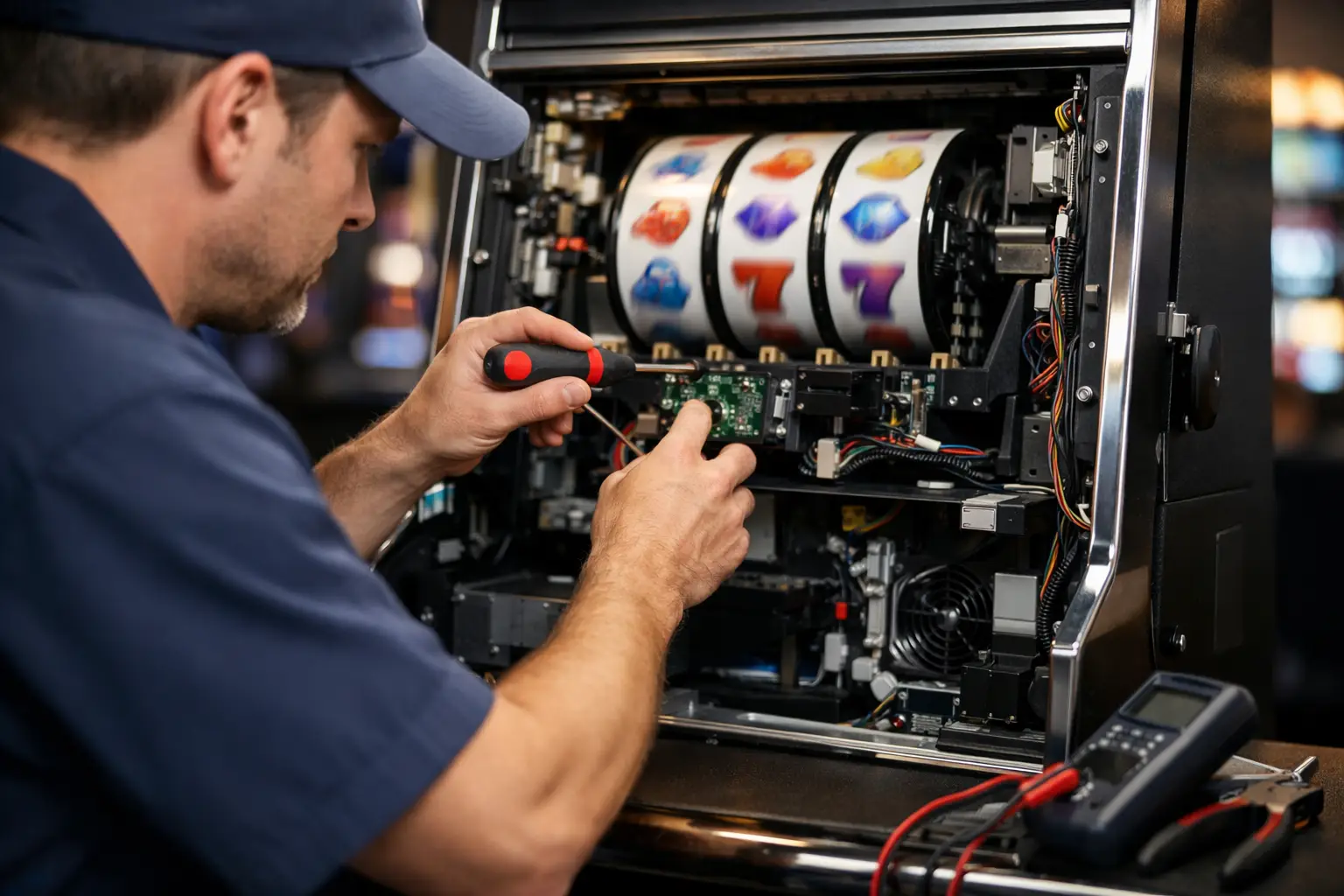
A slot machine that suddenly goes dark, freezes on boot, or refuses to play can go from centerpiece to headache fast. When it comes to repairing nonworking slot machine issues, the biggest mistake people make is assuming every problem is major. A lot of home-use machine trouble starts with something simple – power delivery, a loose connection, a door switch, or a setting that was never fully adjusted for residential use.
That said, not every fix should be a do-it-yourself project. Former casino machines are built tough, but they were also built for commercial environments with different sensors, locks, wiring expectations, and service procedures than most homes. The trick is knowing when you are dealing with a basic issue and when the machine needs experienced hands.
What usually causes a slot machine to stop working?
Most nonworking machines fail in familiar ways. They may not power on at all, they may power on without a picture, they may boot into an error state, or they may light up but not start a game. Those are very different symptoms, and each points you in a different direction.
A machine with no power often has a problem before the game board even comes into play. That could mean a bad outlet, a tripped power strip, a failed switch, a loose power cord, or a power supply issue inside the cabinet. A machine that has lights but no screen may be dealing with a monitor problem, a video connection issue, or a board that is not completing startup correctly.
Then there are machines that are technically on but not usable. A door may not be registering as closed. A bill validator may be interfering with operation. A sensor that made sense on a casino floor may still be creating trouble in a home setup. This is where proper refurbishment matters so much. A machine prepared for residential use should not leave you wrestling with unnecessary commercial hardware.
Start repairing a nonworking slot machine with the basics
Before opening anything up, slow down and check the obvious. It sounds simple because it is simple, and simple fixes are common. Confirm the wall outlet works. Make sure the machine is plugged directly into a dependable power source if you are troubleshooting. If it is connected through an old extension cord or overloaded strip, remove that variable first.
Next, look at the main power switch and any external breaker or fuse access. Some cabinets also have interlocks tied to doors or service panels. If a door is slightly out of position, the machine may act dead or partially functional. Gently open and close the main access areas and try again.
If the machine powers on but behaves oddly, pay attention to what still works. Do the topper lights come on? Does the monitor show anything at all? Do you hear fans, boot tones, or reel movement attempts? Those clues matter. They help separate a total power problem from a board, screen, or communication issue.
Common trouble spots inside the cabinet
Once basic power is ruled out, the next step is looking for the kinds of issues that happen during moving, storage, or long periods of inactivity. Slot machines are heavy, and even well-built machines can develop loose connectors after being transported into a basement, game room, or garage.
Power supply connections are a frequent culprit. So are monitor cables, logic board plugs, and harnesses connected to buttons, reels, printers, or validators. Dust buildup can also create problems over time, especially if the machine has been sitting unused. That does not mean every machine needs deep electrical work. Often it means it needs careful inspection, reseating of connections, proper cleaning, and confirmation that each component is actually communicating the way it should.
Door switches and lock-related components deserve special attention too. A machine that was once used in a casino may have systems tied to security conditions that do not make much sense in a home. If those elements were never properly modified, they can create recurring faults. That is one reason buying a fully shopped machine matters. Good refurbishment is not just cosmetic. It is what makes ownership easier.
When the issue is software, settings, or firmware
Not every repair is physical. Some nonworking behavior comes from outdated firmware, corrupted settings, battery-related memory loss, or errors triggered by unsupported peripherals. A machine may appear broken when it is really stuck in a state it cannot clear on its own.
This is where experience makes a big difference. A casual owner might see an error screen and assume the board is dead. A technician who knows these machines may recognize it as a startup sequence issue, a configuration mismatch, or a component the game is waiting to detect. Sometimes the fix is straightforward. Sometimes it takes board-level testing, software updates, or reconfiguration to make the machine home-ready again.
That is also why one machine model can be easy to service while another becomes a project. Parts availability, game generation, cabinet style, and prior modifications all affect repair difficulty. There is no honest one-size-fits-all answer here.
Repairing nonworking slot machine problems at home vs. calling for service
If your machine has a simple power issue, a loose plug, or a clearly visible connection problem, basic troubleshooting may be enough. If you are comfortable checking fuses, verifying switches, and inspecting for disconnected harnesses, you may be able to solve the problem without much trouble.
But if the machine shows board errors, monitor issues, memory faults, reel calibration problems, or signs of power supply failure, that is usually the point where professional service is worth it. The same goes for machines that were purchased secondhand without clear refurbishment history. A lot of people buy what looks like a great deal, then find out later they bought casino-floor complexity without the updates needed for residential use.
A proper repair process should do more than get the lights back on. It should address the reason the machine failed, test the rest of the system, and make sure the machine is stable for long-term home use. Otherwise, you are just waiting for the next problem.
Why refurbishment quality matters so much
This is the part many buyers do not think about until something stops working. There is a big difference between a used slot machine and a restored, home-prepared slot machine. One may technically function. The other has been inspected, cleaned, repaired, updated, and set up to behave the way a homeowner expects.
That means worn parts should be identified before they fail. It means software and firmware should be checked. It means unnecessary casino-specific sensors, locks, and switches should be removed or modified where appropriate for residential use. It means the machine should be tested as a complete unit, not just powered on and sold.
At St. Louis Slots, that hands-on approach is a huge part of why customers feel confident bringing these games into their homes. When people want the fun and nostalgia of a real casino machine in the basement or game room, they usually do not want to become part-time technicians. They want to hit the button and enjoy the game.
A few signs your machine needs expert attention
Some symptoms are your machine’s way of asking for real service. Repeated boot failures, burning smells, intermittent shutdowns, scrambled displays, stuck reels, and machines that work one day but not the next usually point to deeper issues. So do cabinets that have clearly been modified by multiple previous owners.
That does not always mean the machine is beyond repair. In fact, many of these problems are fixable. But they usually need organized diagnosis, not guesswork. Random part swapping can get expensive fast, and it often creates new problems instead of solving the original one.
The best outcome is reliability, not just a quick fix
When people think about repair, they often focus on the moment the machine comes back to life. That is satisfying, sure, but the better goal is reliability. A slot machine in a home should be fun, dependable, and easy to enjoy. It should not feel like a mystery box that might stop working every other weekend.
That is why careful inspection matters just as much as the repair itself. A machine should be checked for wear, tested under normal operation, and set up so the next game night is about entertainment, not troubleshooting. If your machine is nonworking now, the good news is that many issues can be resolved. The smartest move is simply matching the fix to the real problem – and giving the machine the kind of attention it should have had from the start.
 | Check out our
Comments are closed