
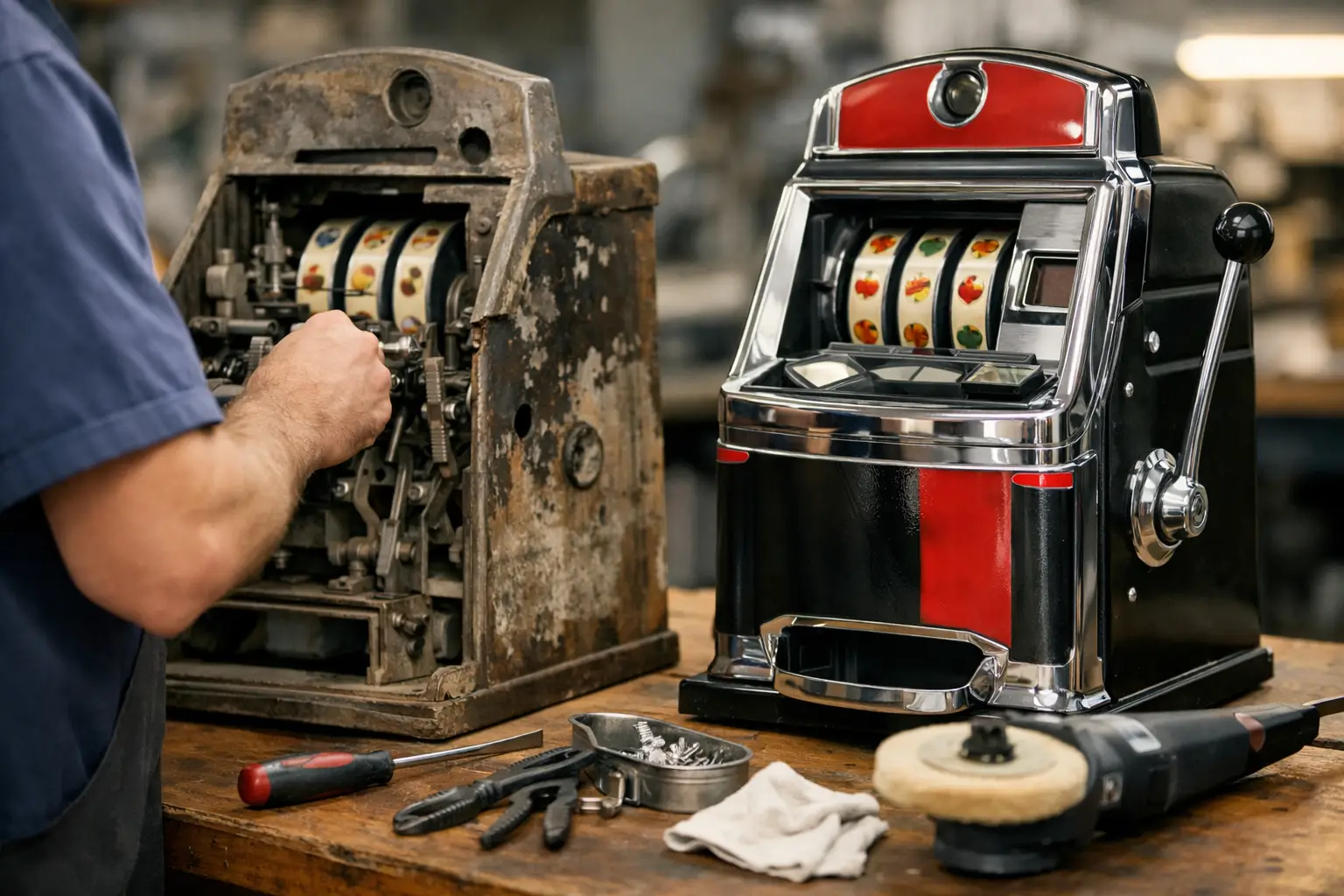
A casino game can look great on the outside and still have years of hard use hiding behind the door. Maybe the buttons are sticky, the bill validator is temperamental, or a cabinet sensor keeps the game from booting. A real slot machine restoration process example starts there – not with a quick wipe-down, but with finding out exactly what the machine needs before it earns a place in your game room.
For home buyers, that difference matters. You are not looking for a machine that merely powers on in a warehouse. You want the authentic lights, sounds, and gameplay you remember from the casino, without becoming the person who has to troubleshoot it every weekend.
What Arrives From the Casino
Former casino slot machines are built for constant public use. They may have spent years on a busy casino floor, with thousands of button presses, bill insertions, door openings, and long operating hours. They were also designed to work as part of a casino system, not as a plug-in-and-play piece of home entertainment.
That means a used machine can come with worn parts, dust inside the cabinet, outdated software, casino locks, player-tracking hardware, and sensors that no longer serve a purpose in a residential setting. None of those issues automatically make a machine a bad candidate for restoration. They simply show why buying an unprepared machine can be a gamble of its own.
A proper refurbishment begins by treating the game as a working piece of equipment, not just a collectible cabinet. The goal is to preserve the personality of the original game while preparing it for reliable, trouble-free home use.
Slot Machine Restoration Process Example: From Arrival to Game Room
Imagine a classic video slot arrives with a clean-looking cabinet but an inconsistent touchscreen, a weak button panel, and a bill validator that occasionally rejects currency. The lights work, the game loads, and a casual seller might call it “working.” A restoration shop sees a machine that needs a full evaluation.
Step 1: Initial power-up and inspection
The first job is to see how the machine behaves before any repairs are made. Technicians inspect the cabinet condition, power supply, wiring, cooling fans, display, speakers, button deck, touchscreen, printer area, door hardware, and internal boards. They also check whether the game boots correctly and whether it runs through normal play without error messages.
At St. Louis Slots, this type of work is guided by a 21-point inspection process. That approach matters because a visible issue is not always the only issue. A dim screen may be a display problem, but it can also point to a power concern. A button that feels slow may be dirty, worn, or connected to a wiring issue.
The machine is inspected with the doors open as well as closed. Casino equipment often uses door switches and security circuits that tell the system when someone has accessed the cabinet. Those features make sense on a casino floor. In a basement, garage, man cave, or she-shed, they can create unnecessary headaches.
Step 2: Deep cleaning inside and out
Next comes the cleaning work that many quick resellers skip. The cabinet exterior is cleaned carefully so the artwork, trim, and finish look their best without damaging original details. Inside, dust and debris are removed from fans, boards, power areas, and hard-to-reach cabinet spaces.
This is more than cosmetic. Dust buildup can affect cooling, and sticky residue around buttons, validators, and moving components can interfere with normal operation. A clean machine is easier to inspect, easier to service, and much more enjoyable to bring into your home.
Cleaning also gives the technician a clearer look at worn connectors, damaged wires, loose fasteners, or signs of past repairs. The goal is not to make an old machine pretend it has never been used. The goal is to make sure it is clean, presentable, and ready for its next chapter.
Step 3: Repairing the parts that affect play
Now the machine gets the attention that turns it from used casino equipment into dependable home entertainment. If buttons are worn, they are repaired or replaced. If a touchscreen is not responding properly, it is tested and addressed. Speakers, lights, monitors, fans, bill validators, and power components are checked for reliable operation.
A machine may need a small adjustment, or it may need a replacement part. It depends on the game, its age, the availability of original components, and how much wear it has seen. The right restoration choice is not always “replace everything.” Good parts should be retained when they are functioning well, while weak or unreliable components should not be left in place just because the machine can technically start up.
The bill validator deserves special attention. For many home owners, using real currency adds to the casino feeling. But a validator that works only some of the time turns fun into frustration fast. It should be cleaned, tested, and calibrated so play feels smooth when friends and family come over.
Step 4: Updating software and firmware
Casino games rely on more than their cabinet hardware. Their software and firmware help control how the game boots, communicates with components, displays graphics, and handles play functions. Updates can address compatibility, stability, and performance issues where applicable.
This stage requires care. Not every game uses the same platform, and updates must match the machine’s components and intended home-use setup. A random software change can create new issues, which is why this work belongs in the hands of people who understand gaming machines rather than a general electronics repair shop.
Technicians also confirm that the game is configured for amusement use at home. The purpose is casino-style fun, not casino-floor operation. That distinction shapes the entire restoration process.
Step 5: Converting casino equipment for residential use
A casino machine often has features that are unnecessary or inconvenient outside a regulated gaming environment. Casino-specific sensors, locks, and switches may be removed, bypassed, or modified as part of preparing the machine for home use.
This is one of the biggest values of a professionally restored game. A buyer should not have to learn why a cabinet door sensor is preventing play or why an old casino security component is creating an error. The machine should be prepared to operate in a residential setting with the functions you actually want.
The trade-off is simple: a home-ready machine is not meant to be dropped back onto a commercial casino floor. That is exactly the point. It is being tailored for the way you will enjoy it – at parties, during game nights, or whenever you want a little casino excitement without leaving the house.
Step 6: Final play testing and certification
Before a restored machine is ready for delivery or pickup, it needs real-world testing. That means more than checking that the attract screen lights up. The game is powered on, cycled through play, tested for button response, checked for sound and display performance, and evaluated for proper bill acceptance if equipped.
Doors are opened and closed, lights are watched, and the machine is allowed to run. This final stage is where small issues have a chance to show themselves before the game reaches your home. A machine that has been cleaned, repaired, updated, modified, and tested is in a completely different category from an as-is casino pull.
Why the Restoration Work Pays Off
Buying an unrefurbished slot machine can appear less expensive at first. But the lower price may leave you responsible for transportation, cleaning, parts hunting, technical setup, and repairs. Older gaming machines are specialized equipment, so a simple-looking problem can become difficult if you do not know the cabinet, software, or electronics involved.
A fully shopped machine costs more because the work has already been done. You are paying for the time behind the scenes: inspection, repair decisions, home-use modifications, software checks, final testing, and support after the sale. For most game room owners, that is a much better deal than bringing home a project they never planned to have.
It also protects the fun. A restored machine lets you focus on showing it off, hearing that familiar bonus sound, and watching guests light up when they see a real casino game in your home. That is the experience people want, and reliable preparation is what makes it possible.
When choosing a machine, ask how it was inspected, what was repaired or updated, whether it has been converted for residential operation, and who will help if you have a question later. The best game room centerpiece is not just the one with the flashiest cabinet. It is the one you can turn on with confidence and enjoy for years.
 | Check out our
Comments are closed