
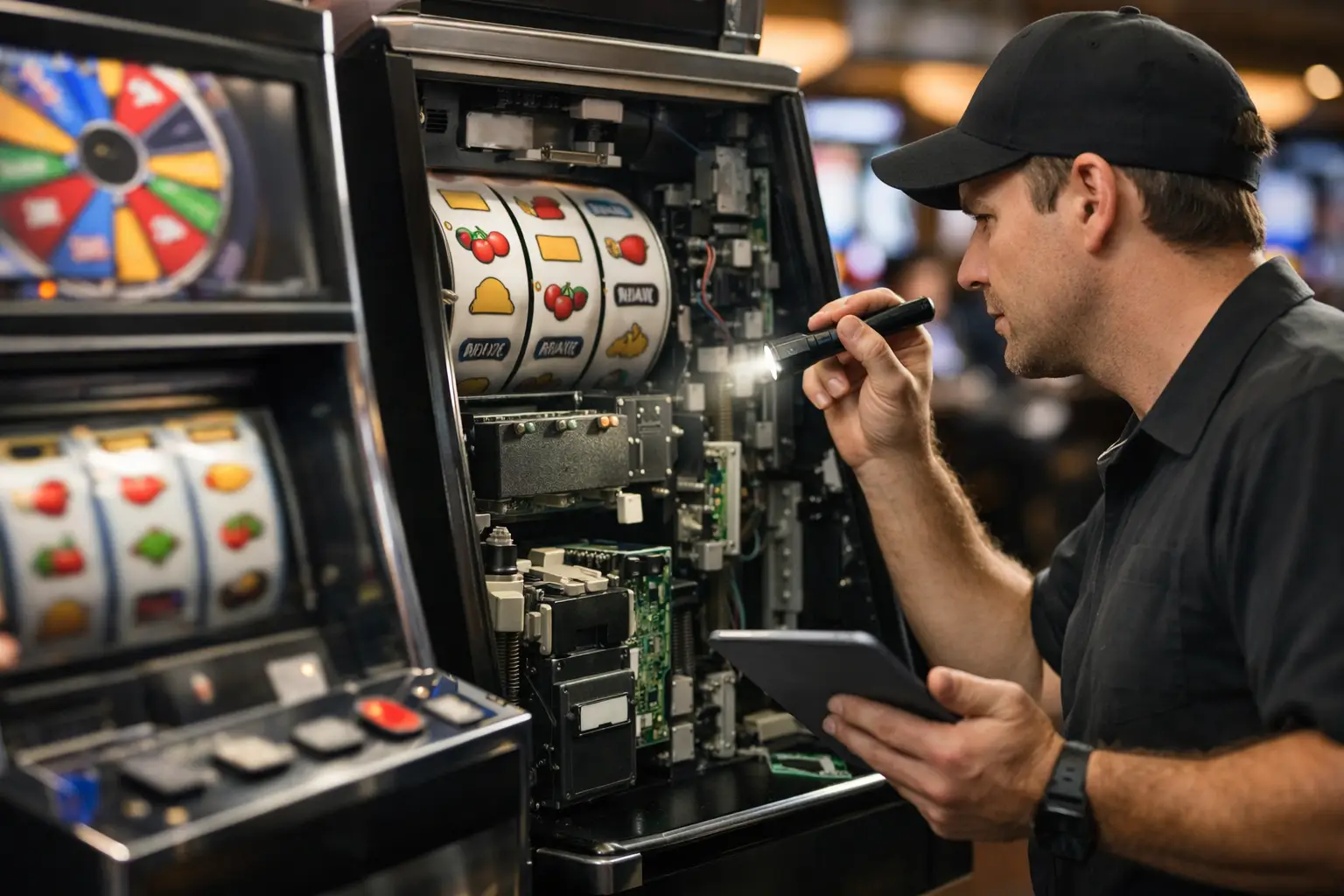
A slot machine can look great on the outside and still give you headaches once it is plugged in at home. That is the part many buyers do not see until too late. A real 21 point slot inspection is not about wiping down the cabinet and calling it refurbished. It is about making sure the machine is ready to play, ready to last, and ready to live outside a casino.
If you are buying a former casino machine for your game room, basement, garage, or man cave, that inspection matters more than almost anything else. These machines were built for commercial floors, not for casual home use. They need attention, updates, repairs, and often some thoughtful changes before they become the kind of machine you can actually enjoy without constantly troubleshooting.
Why a 21 point slot inspection matters
Used casino equipment always comes with a story. Some machines were heavily played. Some sat in storage. Some were removed from service because a part was aging out, software needed attention, or casino-specific components no longer made sense for the next operator. That does not make them bad machines. It just means they need hands-on work before they belong in your home.
A proper inspection creates confidence. You are not just buying a machine because the lights come on. You are buying one that has been checked for function, cleaned, repaired where needed, and prepared for residential use. That difference shows up later, when you want to turn it on for friends and family and have it simply work.
For most home buyers, that is the real goal. You want the casino feel without the casino baggage. No smoke, no travel, no crowds, and no mystery problems hiding inside the cabinet.
What a 21 point slot inspection usually includes
The exact checkpoints can vary a little from machine to machine because not every platform is built the same. A classic reel slot, a video slot, and a video poker cabinet may share a lot of parts, but they do not all age the same way. Still, a serious 21 point slot inspection should cover the systems that affect performance, safety, playability, and long-term reliability.
Cabinet and exterior condition
The outside matters because it tells you how the machine was treated and whether the restoration was cosmetic only or truly complete. The cabinet should be checked for structural integrity, door fit, hinges, locks, trim, buttons, toppers, and visible wear. Scratches and minor signs of age can be part of a machine’s character, but broken hardware and loose components are a different issue.
A good inspection also looks at how the machine feels in person. Doors should close correctly. Panels should sit properly. Buttons should not feel sticky, mushy, or unreliable.
Power supply and electrical health
This is one of the most important areas. Slot machines are full of electronic components, and unstable power is a fast path to frustration. An inspection should include testing the power supply, wiring, connectors, and overall electrical operation.
Loose connections, aging power components, or signs of previous patchwork repairs need to be caught before the machine reaches your home. If they are missed, you may end up with resets, display problems, startup issues, or intermittent errors that are hard to track down.
Monitors, lighting, and sound
A home slot machine should do more than boot up. It should look and sound right. That means checking the monitor for clarity, brightness, burn-in issues, color quality, and stable operation. Lighting systems should be tested for full function, including backlighting, button lamps, top box lights, and any animated elements.
Sound matters too. If the machine’s audio is weak, distorted, or cutting out, the experience feels flat. Part of refurbishment is making sure the fun is still there, not just the hardware.
Buttons, touchscreens, and player controls
This is where many worn machines start to show their age. Spin buttons, bet buttons, service switches, and touchscreen inputs all need to respond correctly. If a button only works sometimes, that is not a small problem. It changes the way the machine feels every time you use it.
A proper inspection catches those weak points early. Some controls can be cleaned and restored. Others should be replaced. Either way, the goal is simple – when you press something, the machine should respond the first time.
A 21 point slot inspection for home-use conversion
This is where refurbished home machines really separate themselves from straight used casino pulls. A machine that worked on a casino floor may still have sensors, locks, switches, accounting functions, and other features tied to a commercial environment. Those can be unnecessary or annoying in a home setting.
Removing casino-specific complications
Many former casino machines need modifications so they can run comfortably in a residential space. That can include removing or bypassing components that were useful in a casino but only create problems at home. Door sensors, lock requirements, and service-related switches may need to be addressed so normal use does not trigger avoidable issues.
This is not about cutting corners. It is about making the machine practical for the way you will actually use it. The best home-use preparation keeps the authentic look and feel while taking away the parts that do not belong in your basement or game room.
Software and firmware updates
A solid inspection should also include checking the machine’s software and firmware status. Older machines can have glitches, outdated settings, or compatibility issues that are better handled before delivery. Updates can improve reliability and reduce the odds of weird behavior later.
Not every machine needs the same level of software work, and some older platforms have limits. That is where experience matters. The goal is not to overpromise perfection. The goal is to make each machine as stable and enjoyable as it can realistically be.
Why inspection is only half the story
Even the best 21 point slot inspection does not mean every machine is identical. These are still real former casino games with age, history, and personality. That is part of what makes them fun to own. But it also means a good seller should pair inspection with actual repair work, cleaning, testing, and support.
If a machine passes through inspection and still has worn belts, weak button assemblies, dirty internals, or outdated settings, the checklist did not accomplish much. Inspection should lead to action. Problems should be corrected, not merely noticed.
That is the difference between a machine that is technically used and one that feels ready for your home. At St. Louis Slots, that hands-on part matters because people are not buying these games as repair projects. They are buying them to enjoy.
What buyers should ask about a 21 point slot inspection
You do not need to become a slot tech before shopping, but you should ask a few practical questions. Was the machine only tested, or was it actually refurbished? Were worn parts replaced if needed? Was it prepared specifically for home use? Were software updates checked? Is support available if something comes up later?
Those questions tell you a lot. Some sellers focus on appearance and basic power-up testing. Others put real work into every game before it leaves the shop. For a home buyer, that difference is huge.
Price can vary because the work varies. A cheaper machine may look tempting at first, but if it still has unresolved electrical issues, flaky controls, or casino-specific nuisances, the savings disappear fast. Paying for proper prep often means paying for fewer problems.
The real value behind the checklist
A 21 point slot inspection is valuable because it protects the experience you are actually buying. You are not just purchasing a cabinet with a game inside. You are bringing home a piece of entertainment, nostalgia, and conversation. It should feel exciting, not unpredictable.
That is especially true if the machine is going into a finished basement, rec room, she-shed, or entertainment space where family and friends will use it. You want the lights, sounds, and gameplay that made you fall in love with slot machines in the first place. You do not want to keep a screwdriver nearby every time someone comes over.
A well-inspected and properly refurbished machine gives you the fun part without dumping the technical burden in your lap. That is what makes the process worth taking seriously.
When a seller talks about a 21 point slot inspection, the best sign is not the number itself. It is the care behind it. A machine that has been checked, repaired, updated, and prepared with real attention is the one you will still be happy to own long after the first spin.
 | Check out our
Comments are closed